
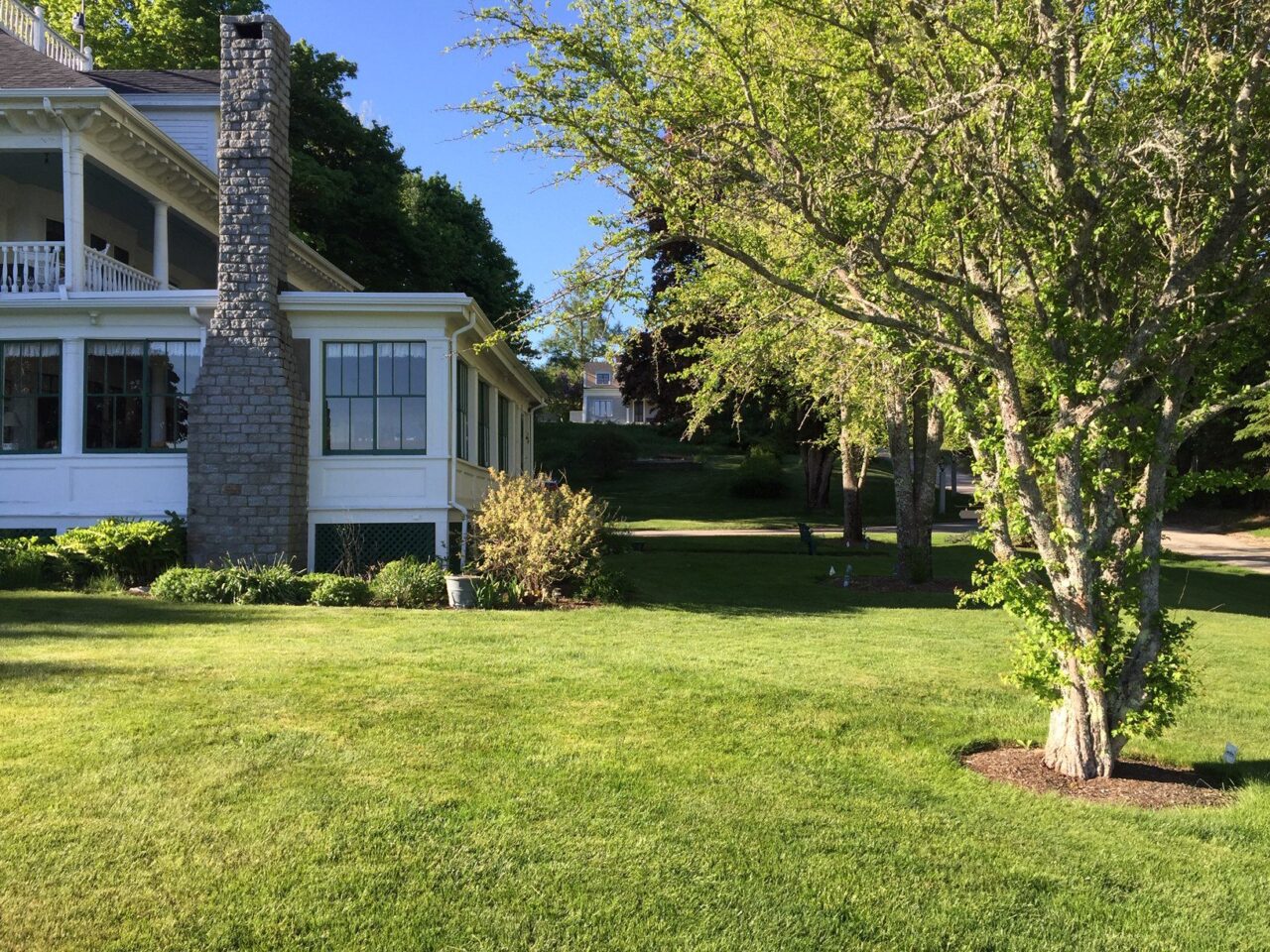
Maine summers are short, which is exactly why homeowners want to use their yards as much as possible during those weeks. The same months when families spend the most time on the lawn, July and August especially, are also when that lawn is under the most stress. Heat, reduced rainfall, and constant foot traffic hit at the same time. The lawns that hold up best through summer are the ones managed with a few deliberate adjustments. The ones that struggle are usually the ones treated the same in August as they are in May.
Understanding How Maine Grass Responds to Summer Heat
The grass species that thrive in Maine, primarily fine fescues, Kentucky bluegrass, and perennial ryegrass, are cool-season grasses. They grow most vigorously in spring and fall when soil temperatures are between 50 and 65 degrees Fahrenheit. When sustained summer heat pushes soil temperatures above 80 degrees, cool-season grasses slow their growth and can enter a state of semi-dormancy. The lawn may look dull or brownish during an extended dry stretch in July or August.
This is important to understand: a dormant lawn is not a dead lawn. Dormancy is a survival mechanism. The grass is conserving energy and moisture rather than actively growing. A healthy lawn can remain dormant for several weeks and recover once temperatures drop and moisture returns. Problems arise when heat stress is compounded by compaction, disease, grub damage, or improper care during that vulnerable period.
Adjusting Your Mowing Height for Summer
One of the most impactful changes you can make to your summer lawn care routine costs nothing: raise your mowing height. During the peak summer months, set your mower deck to cut at three to three and a half inches rather than the two or two and a half inches that might work fine in spring.
Taller grass blades shade the soil surface, significantly reducing moisture evaporation. The shade also makes it harder for weed seeds to germinate and establish in thin areas. Taller grass has a larger leaf surface for photosynthesis, which means the plant can sustain itself more effectively during heat stress without requiring as much water or fertilizer input.
Keep your mower blades sharp throughout the season. A dull blade tears grass rather than cutting it cleanly, leaving ragged edges that turn brown and increase the lawn’s vulnerability to disease. If your mower blade has not been sharpened this season, it is worth doing before the summer stress period begins. Avoid mowing during peak afternoon heat when the grass is already under thermal stress.
Watering Correctly During Maine’s Summer Dry Spells
Maine receives a decent amount of annual rainfall, but summer precipitation is unevenly distributed. July and August in the Bucksport area can bring two to three consecutive weeks with little to no meaningful rain, combined with heat and wind that accelerates soil moisture loss. Homeowners who rely on rainfall alone often find their lawns struggling by mid-July.
The rule for summer watering is deep and infrequent. The goal is to deliver one to one and a half inches of water per week, ideally in one or two applications rather than daily light watering. Deep watering saturates the soil to a depth of six to eight inches, encouraging grass roots to grow downward toward that moisture. Roots that chase deep water develop into a more drought-resistant lawn overall.
Frequent shallow watering does the opposite. It keeps the top inch of soil moist but encourages roots to stay near the surface, where they are most vulnerable to heat and drying. Shallow-rooted lawns show stress faster and need more frequent irrigation to stay green.
Water early in the morning when evaporation rates are lowest and the leaf surface dries quickly after watering begins. Watering in the evening leaves foliage wet overnight, which is a primary condition for fungal disease development. Homeowners with an irrigation system should program it for early morning runs. For those without a system, a consistent schedule matters more than perfect timing.
Managing Foot Traffic Damage
Foot traffic during summer creates two problems: compaction and wear. Compaction in dry summer soil is less severe than compaction in wet spring soil, but repeated traffic on the same areas, especially during drought when grass is brittle, damages crown tissue and kills grass in concentrated spots. Worn paths, goal-mouth areas, and gathering spots around fire pits or furniture often show as brown or bare patches by late summer.
The practical approaches to managing traffic damage include rotating the placement of outdoor furniture and play equipment when possible, using stepping stones or gravel for heavily used pathways rather than expecting grass to hold up, and avoiding walking on the lawn during the hottest and driest days when stress is already high.
Fall aeration is the most effective recovery tool for lawns that have taken heavy summer foot traffic. Core aeration breaks up the compacted soil that accumulated through the season, and pairing it with overseeding in September restores turf density before winter.
Fertilization in Summer: What to Avoid and Why
Summer is not the time for aggressive fertilization on a Maine lawn. Applying high-nitrogen fertilizer during peak heat pushes rapid top growth at exactly the moment when the grass is trying to conserve energy and moisture. Forced growth during heat stress increases disease pressure, particularly fungal diseases like brown patch, which thrive in warm, lush turf.
High-nitrogen summer applications also contribute to thatch accumulation. Rapid blade growth from synthetic nitrogen produces more organic material than the soil microbes can break down quickly, and that excess accumulates as thatch. Over several seasons, this cycle creates a significant thatch layer that causes its own set of problems.
The better approach is to hold the majority of your fertilizer investment for fall. A well-timed September or October fertilization does more for a Maine lawn’s long-term health than any summer feeding, because the grass is actively recovering from summer stress, building root reserves, and preparing for winter. If your lawn needs some input during summer, a light application of a slow-release, lower-nitrogen product is the safer option.
Watching for Grub Activity in Midsummer
July and August are when grub damage typically becomes visible in Maine lawns. Japanese beetles and other beetle species lay eggs in the soil in early summer, and the resulting grub larvae begin feeding on grass roots in late July through August. The signs of grub damage include spongy turf that lifts in patches, increased bird activity on the lawn as birds probe for grubs, and brown patches that do not respond to watering.
The treatment window for grubs is July through early August, before larvae move deeper into the soil for winter. If you notice these signs during the summer, contact Just Grass to assess whether grub control treatment is warranted. Waiting until fall to address grub damage is less effective and more costly, since the root damage by that point is already done. Visit our services page for more information on our grub control and damage repair programs.
The Value of an Irrigation System During Maine Summers
For homeowners who want consistent summer lawn performance without the manual effort of tracking rainfall and running sprinklers, a properly designed irrigation system removes the variables. Smart controllers adjust watering schedules based on local weather data and soil moisture conditions, delivering the right amount of water automatically. This is especially valuable during unpredictable summer dry stretches when a week of missed watering can set a lawn back significantly. Mainely Irrigation, our sister company, handles irrigation installation, spring startup, mid-season service, and fall winterization throughout the greater Bucksport region.
A Simple Summer Lawn Calendar for Bucksport Area Homeowners
June: Raise mowing height to three inches or above. Begin tracking rainfall and supplementing if needed. Watch for early crabgrass and spot-treat if present. Avoid heavy fertilizer applications.
July: Water deeply and infrequently. Monitor for signs of grub activity. Avoid mowing during drought stress if grass is not growing. Do not over-fertilize.
August: Scout for grub damage and address quickly if found. Begin planning fall lawn care: schedule aeration and overseeding for late August or September. A light fertilizer application in late August can support recovery ahead of the fall program.
Professional Lawn Care Serving the Greater Bucksport, Maine Region
Just Grass, Inc. has been providing lawn and landscape management throughout the greater Bucksport area since 2015. Whether you need help managing summer stress, treating grub damage, or setting up a complete seasonal program, our team brings local knowledge to every property. Contact us at 207-702-9074 or justgrassmaine@icloud.com. Visit our services page to learn about the full range of lawn care services we offer throughout Hancock County and the greater Bucksport, Maine region.